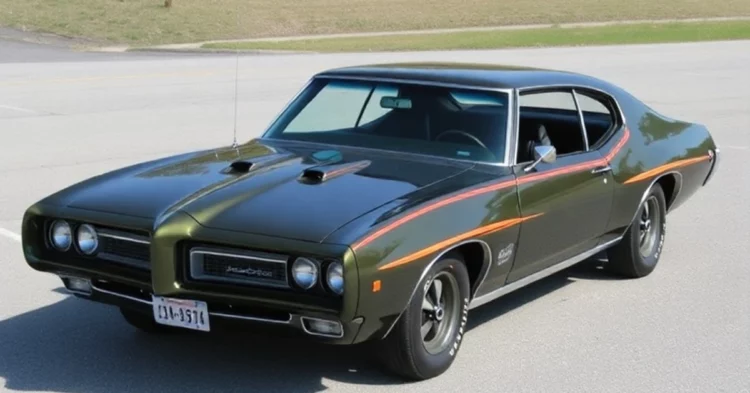
The 1969 Pontiac GTO Judge Hardtop remains one of the most iconic muscle cars in American automotive history. Combining raw power, aggressive styling, and a rebellious spirit, it captured the hearts of car enthusiasts and became a cultural phenomenon. Introduced as an options package to revitalize GTO sales, “The Judge” elevated Pontiac’s midsize performer into a statement of style and performance. Displayed today at the Audrain Auto Museum, this classic showcases the peak of the muscle car craze with its potent Ram Air V8 and distinctive design. This article delves into the history, design, performance, cultural impact, and enduring legacy of the 1969 Pontiac GTO Judge Hardtop.
The Birth of the 1969 Pontiac GTO Judge
A Response to Declining Sales
The Pontiac GTO, launched in 1964, is often credited with igniting the muscle car revolution by pairing a powerful 389-cubic-inch V8 with the midsize Tempest platform. By 1968, however, sales were slipping, with competitors like the Plymouth Road Runner and Chevrolet Chevelle SS gaining popularity. To reverse this trend, Pontiac, led by John DeLorean, introduced “The Judge” as a $332 options package for the 1969 GTO, available on both hardtops and convertibles. Named after the popular “Here Comes the Judge” skit from Rowan & Martin’s Laugh-In, it was designed to appeal to younger buyers through bold styling and performance upgrades.
Initially conceived as a budget-friendly GTO to rival the affordable Road Runner, The Judge evolved into a premium offering packed with features, making it one of the best-equipped muscle cars for the price. In 1969, 6,833 Judges were produced out of 72,287 total GTOs, temporarily halting the model’s sales decline.
John DeLorean’s Vision
John DeLorean played a pivotal role in the creation of both the GTO and The Judge. His vision fused style, power, and marketing brilliance, transforming the GTO into a cultural icon. Borrowing the “GTO” name from Ferrari’s Gran Turismo Omologato and drawing inspiration from pop culture for The Judge, DeLorean ensured the car resonated with the youth market, securing its place in muscle car history.
Design and Features of the 1969 GTO Judge Hardtop
Eye-Catching Exterior Styling
The 1969 GTO Judge Hardtop made a bold visual statement. Initially offered only in Carousel Red—a vivid orange hue similar to Chevrolet’s Hugger Orange—it was later available in Goldenrod Yellow and Crystal Turquoise. Distinctive Judge features included a rear spoiler, racing stripes, prominent fender and hood decals, a functional Ram Air hood with scoops, and an optional hood-mounted tachometer.
The semi-fastback styling retained the GTO’s signature split grille, concealed headlamps, and body-colored Endura front bumper, a GM innovation for low-speed impact resistance. Completing the muscular stance were Rally II wheels wrapped in wide G70x14 Polyglas tires, signaling the car’s performance potential.
Functional and Stylish Interior
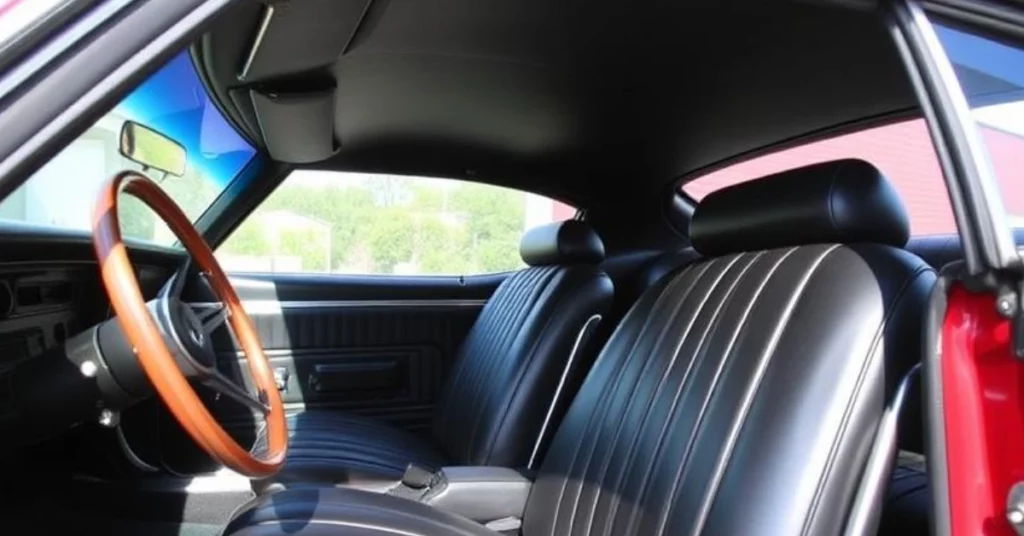
Inside, the Judge shared most of the GTO’s cabin features but added Judge badges on the glovebox door. It included a three-pod instrument panel, black vinyl bucket seats, and a deluxe Hurst four-speed shifter with a T-handle. Optional gauges and the hood tachometer catered to performance enthusiasts, while standard firm suspension provided a connected driving feel. Power steering, front disc brakes, and an AM/FM stereo offered comfort and convenience, making the Judge versatile for daily driving and spirited runs.
Performance and Engineering
Potent Ram Air V8 Engines
The 1969 GTO Judge Hardtop was powered by a 400-cubic-inch V8, available in two high-performance variants:
- Ram Air III: Standard on The Judge, producing 366 horsepower and 445 lb-ft of torque at 3,600 rpm. It accelerated from 0–60 mph in 5.2 seconds and completed the quarter-mile in 13.8 seconds at 102 mph.
- Ram Air IV: Optional $390 upgrade delivering 370 horsepower with a specialized cam design and high-flow exhaust. Only a few Judges received this engine, making it highly collectible today.
Transmission options included a three-speed manual with Hurst T-handle, four-speed manual, or automatic. The rear-wheel-drive system and Safe-T-Track limited-slip differential ensured optimal power delivery for drag-strip performance.
Handling and Dynamics
Built for straight-line speed, the Judge featured firm suspension for stability during high-speed runs. Its wide tires offered decent cornering for a 3,800-pound car, though smaller pony cars like the Mustang were nimbler. Optional power-assisted front disc brakes enhanced stopping power, while balanced weight distribution and responsive steering made it enjoyable to drive on open roads.
Cultural Impact and Legacy
A Pop Culture Phenomenon
The 1969 GTO Judge became a symbol of freedom, power, and rebellion. Vibrant colors, bold marketing slogans like “All rise for The Judge,” and its debut at Riverside Raceway on December 8, 1968, cemented its status as a youth icon. Despite its popularity, the muscle car era declined in the early 1970s due to emissions regulations, rising insurance costs, and the 1973 oil crisis, leading to The Judge’s discontinuation after 1971.
Collectibility and Value
Today, the 1969 GTO Judge Hardtop is a prized collector’s car. Of the 6,833 Judges produced in 1969, only 108 were convertibles, making hardtops more common but still highly sought after. Hardtops with the Ram Air III typically sell for $60,000–$100,000, while Ram Air IV models can exceed $150,000. Convertibles in mint condition have reached as high as $620,000. The Audrain Auto Museum’s Carousel Red example with a Ram Air III is a pristine display of this legacy.
The GTO Judge’s Enduring Appeal
The 1969 Pontiac GTO Judge Hardtop set a benchmark for muscle cars, blending power, style, and cultural relevance like few others. Its influence can be seen in later performance cars such as the Dodge Viper and Chevrolet Camaro, which continue the formula of big-block V8s and aggressive styling. For collectors, it’s a tangible link to the muscle car era; for enthusiasts, it’s a reminder of when performance ruled the road.
Modern automakers can learn from the Judge’s success: combining style, performance, and cultural impact creates lasting emotional connections with drivers—something even electric and autonomous cars can strive to achieve.
The 1969 Pontiac GTO Judge Hardtop is more than a muscle car—it’s an American legend. From its vivid Carousel Red exterior to its ferocious Ram Air V8 and Hurst-shifted transmission, it embodies the bold, rebellious spirit of the late 1960s. Whether displayed in museums or cruising down highways, The Judge remains a timeless icon of performance, style, and automotive passion.